
sEMG-Smart Textiles
electromyography
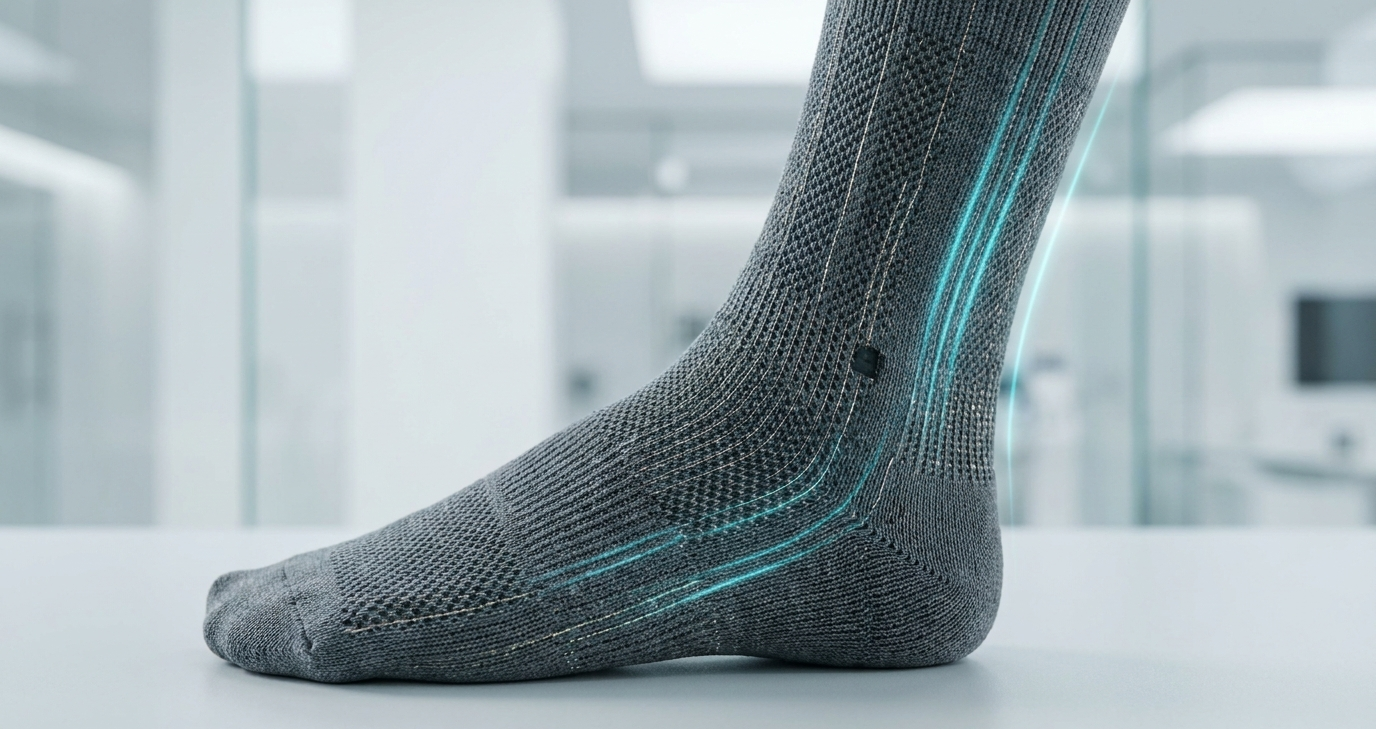
sEMG-Controlled Smart Textiles
for Motor Rehabilitation
This research project focuses on the development of smart textiles equipped with wearable actuators controlled directly by surface electromyographic (sEMG) electrophysiological signals. Designed to address the critical need for affordable, personalized, and long-term motor rehabilitation, the project replaces heavy and bulky traditional robotic devices with comfortable, textile-integrated systems.
Clinical Context & Objective
- The Problem: Every year, hundreds of thousands of individuals suffer Central Nervous System (CNS) lesions caused by stroke, multiple sclerosis, or brain and spinal cord trauma. While motor rehabilitation is essential for recovery, conventional robotic exoskeletons are heavy, rigid, costly, and largely restricted to clinical environments.
- The Solution: A feasibility study to create a lightweight, wearable actuation system embedded within a textile matrix and driven in real time by the patient's own sEMG electrophysiological signals.
- Proof-of-Concept Prototype: Development of a wearable textile orthosis (a smart sock) engineered to prevent and treat "drop foot" (foot drop), a common gait impairment resulting from neuromuscular pathologies such as stroke, cerebral palsy, and multiple sclerosis.
Core Technology & Actuation Mechanism
- Shape Memory Alloys (SMA): The system utilizes Nickel-Titanium (NiTi) SMA wires as silent, lightweight micro-actuators woven directly into the fabric.
- sEMG Signal Conditioning & Control: Surface electromyographic signals collected from the patient are conditioned to generate control inputs that activate the NiTi SMA wires.
- Motor Unit Simulation: Arrays of SMA wires are arranged within the weave to simulate biological motor units and generate targeted lines of force.
Consortium & Key Partners
- Gippy Ballesio: Responsible for smart textile engineering, investigating NiTi wire weaving patterns, textile processing, and anchoring strategies to transmit generated forces effectively through the fabric.
- COREP: Expertise in the acquisition, conditioning, and processing of surface EMG signals and control algorithm generation.
- SAES-Getters: World leader in SMA materials, providing technical consulting and supplying specialized NiTi wires.
Key Advantages & Clinical Benefits
- Lightweight & Silent: Drastically reduces device dimensions, weight, and complexity compared to rigid robotic exoskeletons while offering completely silent operation.
- Shielded Environment Compatibility: Unlike electromagnetic motors, NiTi SMA actuators are non-magnetic and can be safely operated inside shielded clinical imaging environments, such as MRI, fMRI, and MEG.
- Camouflaged Technology: Integrating sensing, actuation, and control into a familiar garment (like a sock) "disguises" the technology, maximizing the patient's physical, sensory, and emotional comfort.
Long-Term Vision
The results of this feasibility study lay the groundwork for a broader vision: developing wearable smart suits or sleeves embedded with artificial muscle-inspired sensor/actuator networks. These garments will detect movement and electrophysiological signals in real time to provide adaptive, active assistance for daily living and continuous home-based rehabilitation.